


What is the cloud egress tax — and why does it hit AI apps hardest?
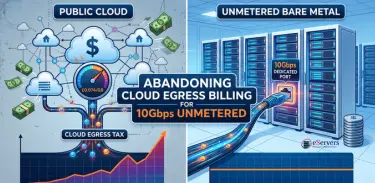
Public cloud providers have a straightforward pricing asymmetry: data flowing into your server (ingress) is free. Data flowing out to your users (egress) is metered and billed per gigabyte.
For a static website or a simple REST API, egress costs are negligible — a few pounds per month. But modern AI applications are fundamentally different in their data output profile:
A real-time voice synthesis response streams 200–400 KB of audio per request
A live AI image generation result delivers 1–4 MB per generation
A video AI processing pipeline can output 50–200 MB per job
A multimodal chatbot serving conversation history with embedded media scales linearly with concurrent users
When an AI application reaches even modest scale — say, 50,000 active users per day — the egress volume becomes the dominant infrastructure cost, not compute.
The Structural Math: Fixed vs. Variable Network Economics
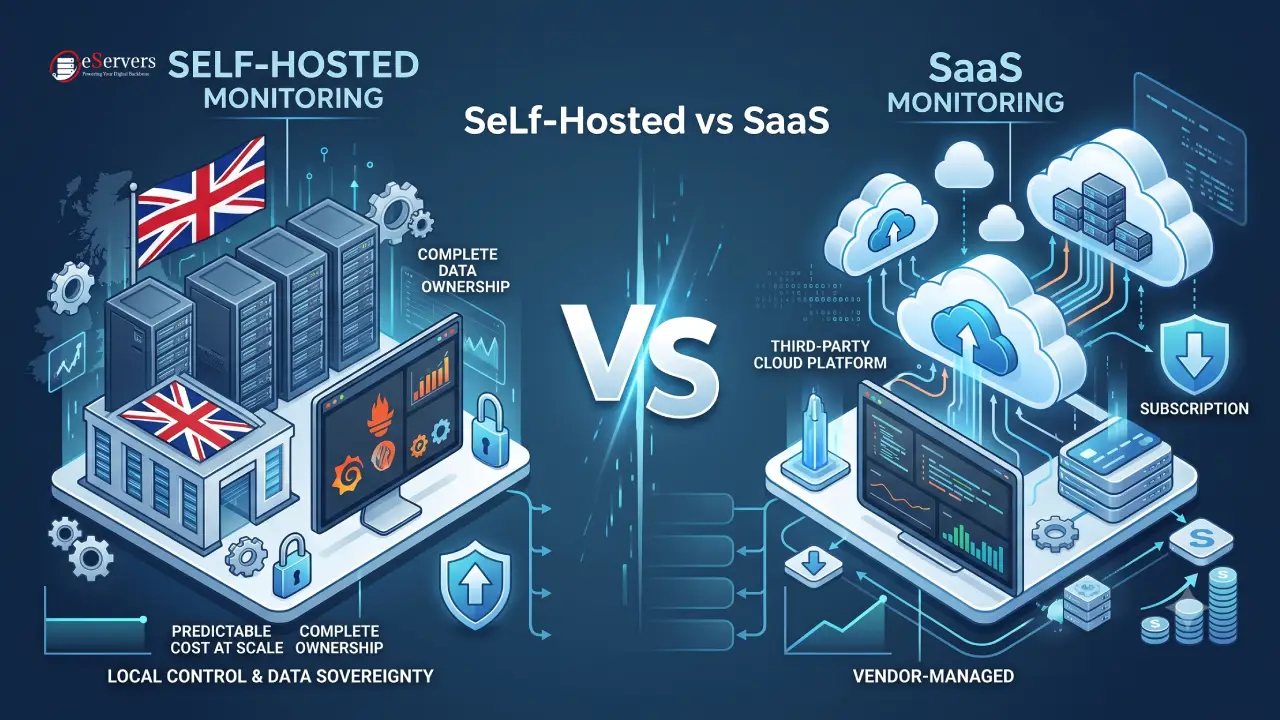
To understand why scaling AI startups are shifting their architecture, we have to look at the structural difference between variable public cloud billing and flat-rate infrastructure economics.
In a standard public cloud setup, your monthly financial commitment is highly unpredictable because it relies on two independent variables:
Compute Resources: The fixed or hourly rate for virtual instances (CPUs/GPUs).
Metered Volume: A completely variable charge based on how many gigabytes your users pull from those instances daily.
When your AI application processes multimodal data (such as high-resolution images, streaming audio, or live video feeds), the network data transfer scales directly with your user growth. This creates a compounding billing effect where your network pipe costs can easily eclipse your actual compute costs.
What this means in practice: An AI application transferring 100 TB of outbound data per month can easily rack up approximately £6,500–£8,500 in egress fees alone on typical public cloud platforms — before a single pound of compute, storage, or support cost is counted. At 500 TB/month (a mid-scale AI platform), that figure exceeds £30,000 per month in bandwidth billing, every month, with no ceiling.
The Bare Metal Alternative: By moving to a dedicated server with an unmetered 10Gbps port, you convert a volatile, usage-based variable cost into a predictable, fixed operating expense. Whether your model streams 5 Terabytes or 500 Terabytes of outbound content to your users in a given month, your infrastructure cost remains exactly the same. This allows engineering teams to accurately project operational margins and scale user acquisition without fear of a sudden billing spike.
The "success penalty": why growth makes the problem worse
The egress billing model creates a structural problem for growth-stage AI startups: the more successful your product becomes, the faster your infrastructure costs accelerate — often outpacing revenue.
Consider a typical AI voice translation application:
Month 1 (1,000 users/day): ~5 TB egress → ~£350/month in bandwidth fees. Manageable.
Month 6 (20,000 users/day): ~100 TB egress → ~£7,000/month. Now a board-level concern.
Month 12 (100,000 users/day): ~500 TB egress → ~£35,000/month. Often exceeds the entire original infrastructure budget.
This is what infrastructure engineers call the success penalty — your cloud bill grows quadratically while your revenue, constrained by sales cycles and conversion rates, grows linearly. Bandwidth fees become the primary obstacle to profitable scaling, not product-market fit.
The solution is not to limit users. It is to change the billing model.
What unmetered 10Gbps bare metal actually means
"Unmetered bandwidth" is a term that requires precise definition. There are important distinctions:
What it means at eServers:
A dedicated 10Gbps physical port — not shared with other customers
No monthly data transfer cap — transfer 10 TB or 500 TB, the bandwidth cost does not change
No burst pricing, no overage fees, no fair-use throttling that reduces your speed after a threshold
Flat monthly server price inclusive of bandwidth
What 10Gbps delivers in real terms:
Maximum theoretical throughput: 10,000 Mbps = 1.25 GB per second sustained
Serving a 4 MB AI image response: capable of 312 concurrent deliveries per second
Serving a 400 KB voice synthesis stream: capable of 3,125 concurrent streams per second
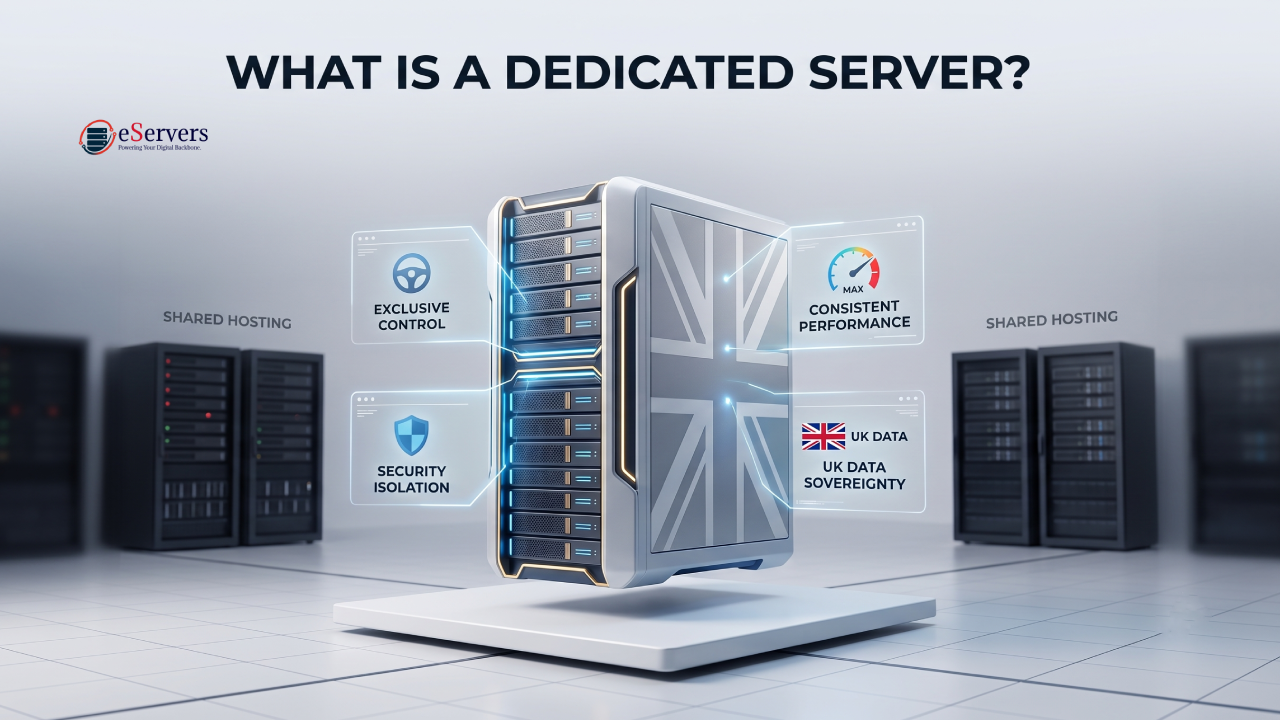
The physical NIC advantage: On a cloud VPS, your "network interface" is virtualised — a software abstraction managed by the hypervisor that is shared across dozens or hundreds of tenants on the same physical host. Network contention from a neighbouring tenant directly degrades your throughput with zero visibility or recourse.
On a dedicated bare metal server, you have exclusive access to the physical NIC. No hypervisor layer. No noisy neighbours. Consistent throughput under load.
UK latency: why server location matters for real-time AI
For many AI workloads, latency is as important as throughput. Two scenarios where this is critical:
Real-time voice and conversation AI: Human speech perception is sensitive to latency above approximately 150ms round-trip for natural conversation flow. Server round-trip to a UK user from a data centre in Frankfurt or Dublin adds 15–30ms of physical distance latency before any application processing. From a US East Coast cloud region, that figure rises to 80–120ms — pushing total response latency into perceptible delay territory.
Algorithmic trading and financial AI: Latency windows of 10–50ms can represent the difference between a profitable and an unprofitable trade execution. Regulatory requirements under FCA guidelines also mandate that certain UK financial data is processed within UK jurisdiction.
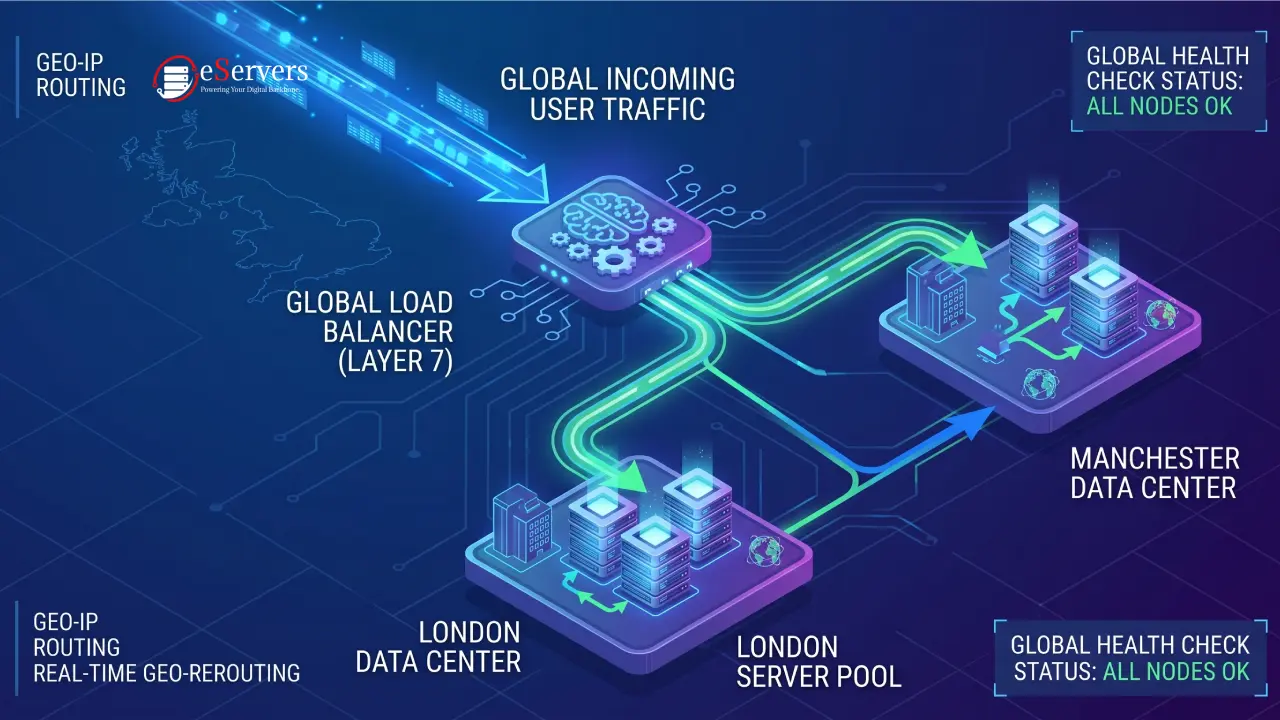
eServers operates bare metal infrastructure in London, Manchester, and Coventry. Network latency benchmarks from these facilities to major UK ISP endpoints (BT, Virgin Media, Sky) typically measure 2–8ms — well within real-time interaction thresholds for UK users.
UK GDPR data residency: Hosting AI workloads on UK-based infrastructure provides a straightforward compliance path for data residency obligations. Data processed and stored on eServers infrastructure does not leave UK jurisdiction by default — a requirement that enterprise and public sector AI clients increasingly mandate as a contractual condition.
Reliability: the bare metal vs cloud SLA comparison
The most common reason teams hesitate to move from cloud to bare metal is fear of hardware failure — and the assumption that cloud providers have superior reliability. The reality is more nuanced.
| Metric | Typical Cloud Instance | eServers Bare Metal |
|---|---|---|
| Uptime SLA | 99.99% | 99.99% |
| Hardware failure response | Auto-migrate (minutes to hours) | Physical replacement: 15–30 min SLA |
| Maintenance windows | Scheduled by provider, limited control | Coordinated with customer |
| Failure visibility | Abstract — you see an instance event | Direct — you know exactly what failed |
| Data residency on failure | Data may migrate across zones | Stays in stated UK location |
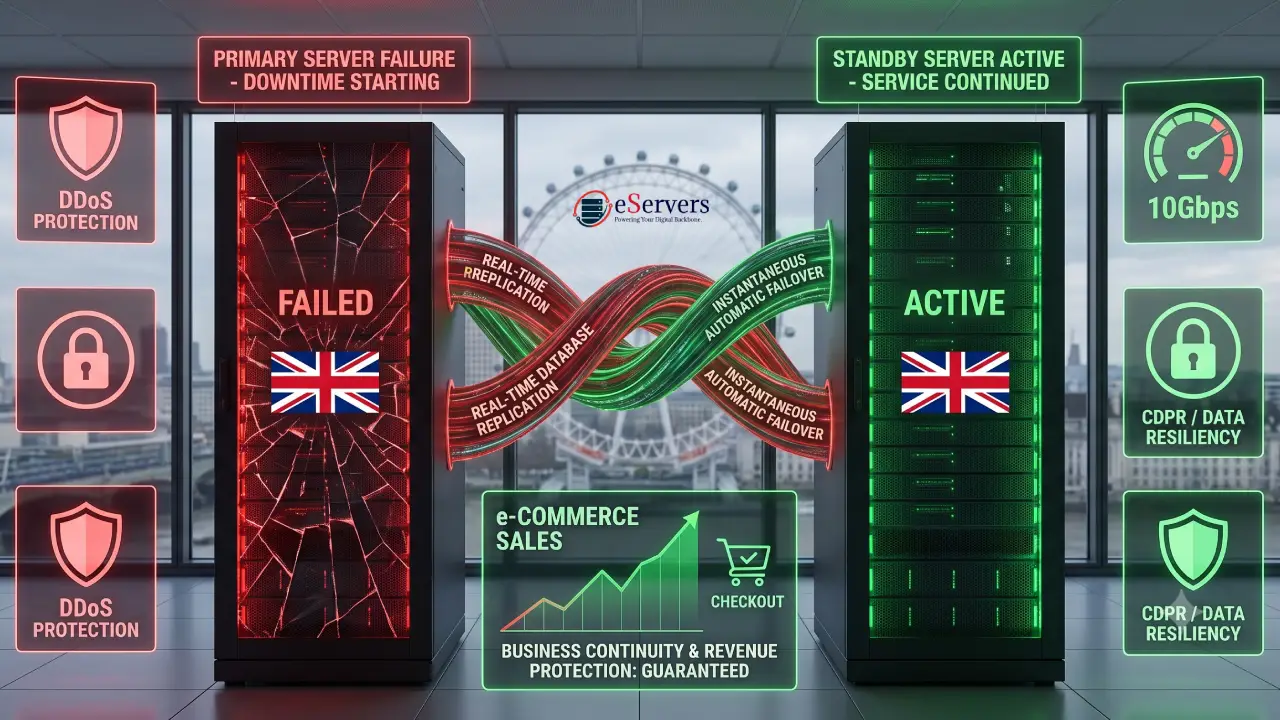
Cloud providers handle hardware failure by migrating your workload to another virtualised instance — a process that can take minutes to hours and may involve brief service interruption with limited notification. On bare metal, hardware failure is resolved by physical replacement. eServers' 15–30 minute hardware replacement SLA means an engineer is physically on-site and replacing the failed component within that window.
For AI inference workloads where sustained throughput is the primary KPI — not burst elasticity — predictable hardware with fast physical replacement often outperforms cloud auto-migration in practice.
Who should (and should not) move to bare metal
Bare metal is not the right infrastructure choice for every AI workload. An honest assessment:
Good fit for bare metal:
AI applications with sustained, predictable traffic (inference APIs, streaming services, real-time voice/video)
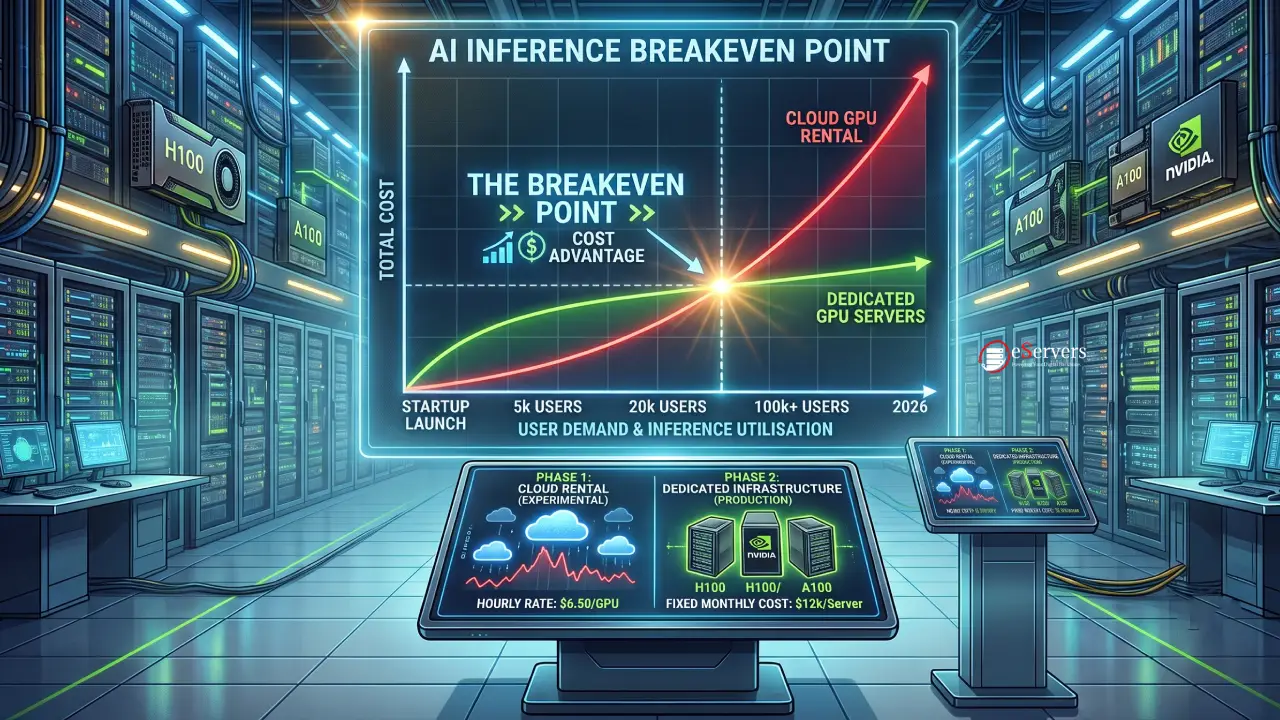
Workloads where egress volume exceeds ~20 TB/month — the crossover point where bare metal pricing typically becomes competitive
Latency-sensitive applications serving a UK-concentrated user base
Applications with strict UK data residency requirements
Teams with Linux sysadmin capability in-house
Better served by cloud:
Early-stage prototypes with unpredictable or very low traffic
Workloads requiring rapid horizontal auto-scaling (e.g., batch GPU jobs with spiky demand)
Teams without infrastructure management capability
Applications requiring multi-region failover without operational overhead
The decision is not ideological — it is a function of your traffic profile, team capability, and unit economics.
eServers bare metal for AI workloads
eServers provides dedicated bare metal infrastructure built for high-throughput AI applications operating in the UK market.
Core specifications relevant to AI bandwidth workloads:
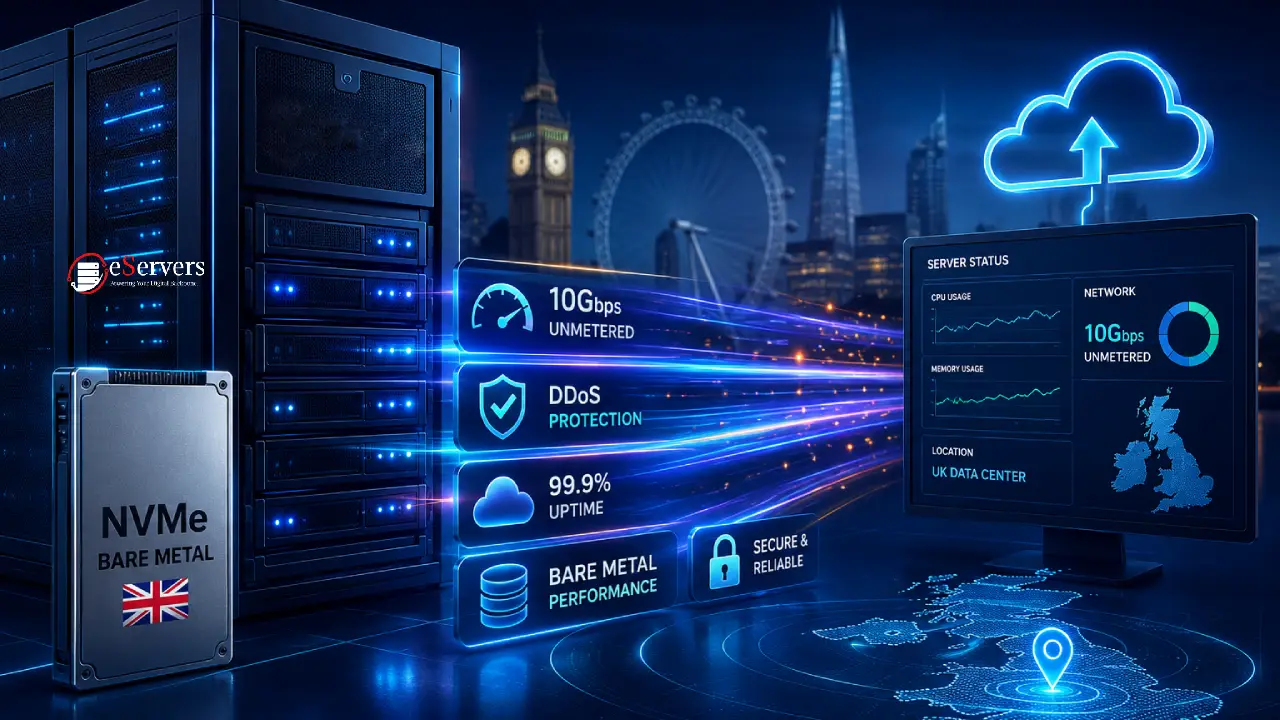
10Gbps unmetered dedicated port per server — no shared bandwidth, no egress billing
Data centres in London, Coventry, and Manchester — sub-10ms latency to UK endpoints
99.99% uptime SLA with 15–30 minute on-site hardware replacement guarantee
Ubuntu 24.04 LTS available — compatible with PyTorch, TensorFlow, CUDA, and standard ML inference stacks
UK-based support available 24/7 — not offshore ticketing
Pricing Transparency: Our standard UK bare metal dedicated servers start at just $53/month (Intel Atom 8-Core, 4GB RAM, 1Gbps port with 10TB transfer). For our specialized 10Gbps Unmetered AI instances, please explore our high-throughput options below.
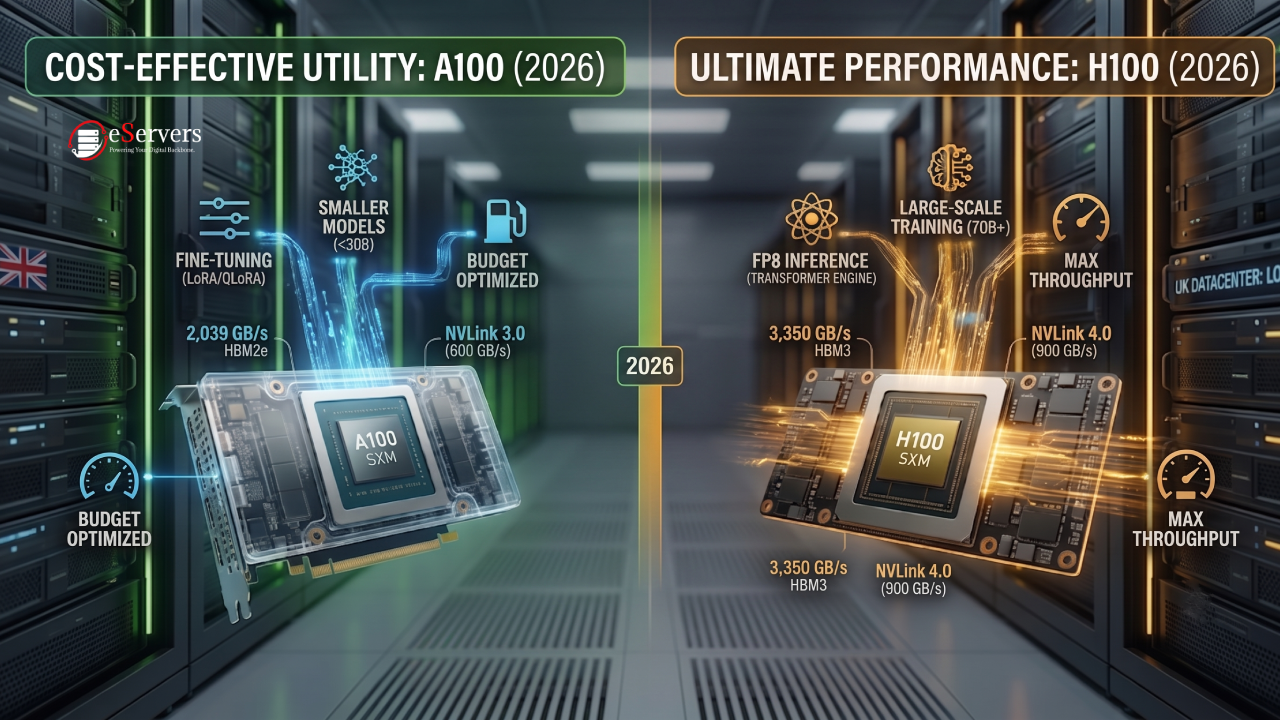
For teams running GPU inference workloads, eServers also offers bare metal GPU server configurations with the same unmetered bandwidth model.
View dedicated bare metal server plans
View bare metal GPU server options
Frequently Asked Questions (FAQ)
What exactly is cloud egress, and why is it expensive?
Cloud egress is the data transfer fee charged by major cloud providers for outbound data — data sent from your server to your users. It is typically billed per GB. At high volumes, this fee accumulates faster than compute costs for data-intensive applications like AI voice synthesis, video generation, or real-time streaming.
At what data volume does bare metal become cheaper than cloud?
The crossover point varies by cloud provider and server specification, but for most AI applications transferring more than 20–30 TB of outbound data per month, a dedicated bare metal server with unmetered bandwidth is cheaper in total cost than an equivalent cloud instance with metered egress. Above 100 TB/month, the cost difference is typically 3–5×.
Does \"unmetered\" mean unlimited speed, or unlimited data?
It means unlimited data volume on a dedicated port of fixed speed. A 10Gbps unmetered server can transfer as many terabytes per month as the port physically allows (approximately 3,375 TB theoretical maximum at sustained line rate), with no additional billing. The port speed itself is fixed at 10Gbps — it is not unlimited speed.
Can I run PyTorch or TensorFlow inference directly on an eServers bare metal server?
Yes. eServers bare metal servers run standard Ubuntu 24.04 LTS. You can install CUDA drivers, PyTorch, TensorFlow, ONNX Runtime, or any other ML inference stack directly, identically to how you would on any physical Linux server.
How does eServers handle hardware failure — do I lose my data?
Hardware failure (disk, RAM, NIC) triggers a physical replacement by on-site engineers within the 15–30 minute SLA. Your data on surviving storage is preserved. For critical workloads, eServers recommends RAID-configured storage and, for maximum resilience, a secondary server in a different UK data centre location.
Is bare metal compliant with UK GDPR data residency requirements?
eServers infrastructure is physically located in the UK (London, Coventry, Manchester). Data processed and stored on your server does not leave these locations by default. This provides a clear basis for UK GDPR data residency compliance. Your legal team should confirm the specific obligations for your application — eServers can provide data processing agreements (DPAs) on request.
What is the minimum contract length?
eServers bare metal servers are available on monthly rolling contracts with no long-term commitment required.