

Positioned within Europe’s leading technology corridor, a Slough bare-metal deployment offers direct integration with transatlantic subsea fiber links and major continental network backbones. This infrastructure provides ultra-low latency routing and robust bandwidth capacity, delivering the geographic diversity required for resilient IT frameworks.
Deploying dedicated bare-metal infrastructure in Slough provides highly connected, carrier-neutral network access optimized for both domestic UK traffic and international data transmission.
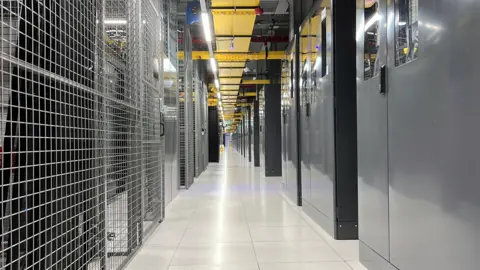
Selecting the right server architecture prevents network bottlenecks and avoids unnecessary hardware expenditure. Our Slough server portfolio provides a clear upgrade path based on technical requirements and processing demands.

Technical Justification: Transitioning from virtualized environments to
dedicated infrastructure requires a stable, cost-effective baseline. Single-processor
configurations establish a secure, isolated foundation without resource contention.
Capabilities: Perfect for establishing predictable compute power, isolating
internal development environments, and running dedicated background services that do not require
massive multi-threading.

Technical Justification: As concurrent system requests increase, storage
read/write speeds become the primary limiting factor. This tier pairs multi-core processors with
Enterprise NVMe solid-state drives.
Capabilities: By eliminating physical disk latency, these servers deliver the
massive IOPS (Input/Output Operations Per Second) required for rapid database retrieval, complex
SQL query execution, and high-frequency API responses.

Technical Justification: Intensive virtualization, corporate ERP hosting, and
large-scale data analytics demand exceptional resource density. High-end deployments utilize
Dual Processor architectures (such as dual Intel Xeon setups) to provide maximum parallel
processing capabilities.
Capabilities: These highly scalable servers allow network engineers to
consolidate extensive workloads onto a single physical chassis, streamlining hypervisor
management while maximizing total processing throughput.
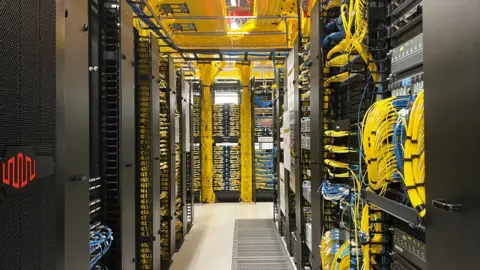
For organizations managing sensitive data, the physical control of underlying hardware is a critical compliance factor.
Absolute Hardware Sovereignty: Shared virtualization inherently introduces the risk of unpredictable performance due to noisy neighbors. A dedicated server grants exclusive access to fundamental hardware primitives—CPU cycles, RAM allocations, and disk I/O. This isolated computing environment ensures strict adherence to UK data residency requirements while protecting proprietary databases from external vulnerabilities.
Slough operates in an expansive, carrier-dense environment that provides excellent routing to major financial exchanges and global cloud providers. It stands as an industry-standard location for businesses requiring immense bandwidth, geographic infrastructure diversity, and specialized network pathways.
A carrier-neutral data centre allows multiple independent telecommunication networks to integrate within the same building. Instead of relying on a single monopoly provider, network engineers can utilize Border Gateway Protocol (BGP) to blend multiple network carriers. This creates redundant routing paths that maximize continuous uptime.
Yes. Administrators are granted complete root privileges alongside dedicated remote hardware access (IPMI/KVM). This out-of-band connectivity empowers your engineering team to maintain absolute control over BIOS configurations, operating system installations, and custom security protocols at the hardware level, completely independent of the main server network.


